Google
 
Showing posts with label Badminton Research. Show all posts

15 November 2007

The flight of the shuttlecock:
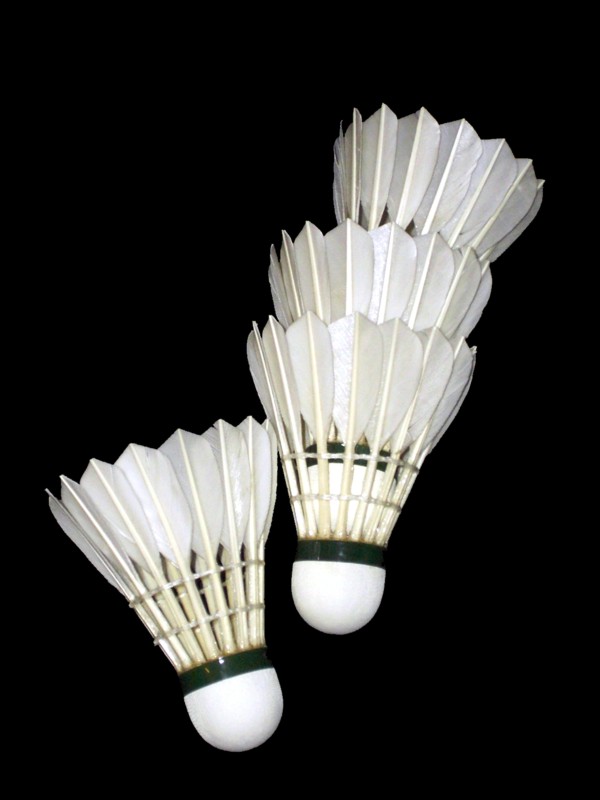
Badminton could finally break with its Victorian past if manufacturers succeed in producing a synthetic shuttlecock that matches the performance of the traditional feather one

by ALISON COOKE and JUSTIN
http://
www.newscientist.com


More than forty years since the invention of the synthetic shuttlecock, players at next week's All England Open Badminton Championship in Birmingham will still be using goose feather designs dating from the early part of the century. Top players and coaches say manufacturers have yet to produce a synthetic shuttle that's as good as the real thing. But now manufacturers are hitting back. They're beginning to work out why feathered flight is so difficult to copy and claim that within 18 months a new generation of shuttlecocks with carbon fibre 'feathers' will transform players' attitudes.

The differences between feathered and nylon plastic shuttles are subtle. Players talk of a lack of control when playing with synthetic models. There is less 'touch', less 'feel'. Badminton is a sport of cunning. Success depends on deceiving your opponent with changes in racket angle and wrist movement in the last fraction of a second before playing the shot. Shuttles fly at speeds in excess of 67 metres per second (150 miles per hour) during a game and must be deftly controlled to make the deception work. Anders Nielsen, Britain's second ranked player, says: 'With less control, plastic designs reduce the variety of shots available to the player and so lead to a less tactical game.' And he points out that 'synthetic models travel faster through the air and so favour the attacking player who likes to smash'. The difference in speed is due to differences in air resistance between the two types of shuttle.

Feather shuttlecocks are made of a hemispherical cork or plastic nose with 16 feathers attached to it, and weigh around 5 grams. The spines of the feathers are glued into holes in the cork or plastic and fan out behind the nose to form a cone. Synthetic shuttles have the same shape but replace feathers with a moulded nylon plastic skirt. But because the skirt cannot mimic feathered flight, synthetic shuttles are banned from top-level badminton competitions.

Badminton developed from the ancient game of battledore and shuttlecock, in which several players tried keep a shuttle in the air for as long as possible. One theory suggests the modern game was first played in the 1860s by the Duke of Beaufort's family at Badminton House in Somerset. Another says the rules were developed earlier by British Army officers in Poona, India, and subsequently brought back to Badminton House.

The invention of a cheap and durable synthetic shuttlecock in 1952 gave the game wider appeal. Badminton is now played in over 123 countries and by an estimated 4 million people in England alone. Synthetic models now account for 60 per cent of shuttlecock sales and are used mostly by amateurs. They sell for about a £1 each, half the price of top quality feather models, and manufacturers claim they last three or four times as long. If a single spine breaks on a feather model, the whole shuttle must be replaced - although a recent version allows individual feathers to be replaced.

The International Badminton Federation (IBF), formed in 1934 and based in Cheltenham, issues guidelines on shuttlecock size, weight and shape. The feathers, a by-product of geese destined for the pot, must be between 64 and 70 millimetres long. When they are attached to the cork nose, they should form part of a cone between 58 and 68 millimetres across. The maximum diameter of the cone is important because it determines the drag on the shuttle and consequently its speed through the air. Manufacturers produce several 'speeds' by varying the weight of the shuttle between 4.74 and 5.50 grams and by using cones of different sizes. Players match the speed of the shuttle to playing conditions. At high temperatures, the air is less dense, for example, and shuttles fly faster. The players choose a slow speed to compensate.

Shuttlecocks must also spin. Because feathers differ slightly in size, weight and shape, shuttles are never perfectly symmetrical. The spin evens out the slight asymmetries which would otherwise cause the shuttle to veer off course. The feathers overlap like the blades of a turbine so that air flowing through them always produces an anti-clockwise rotation as viewed by the attacker as the shuttle leaves his or her racket.

The properties that give nylon the durability so treasured by amateurs, are, unfortunately, responsible for its shortfalls in professional play. Almost all the differences can be traced to the natural stiffness of feathers compared with plastic skirts. This affects the impact with the racket, the flight through the air, even the rate of spin. Feathers are ideally suited to badminton. Their circular cross section provides strength and, because they are hollow, feathers are also light. The plastic spines used in artificial designs, on the other hand, are solid but less rigid.

One important characteristic of shuttlecocks is how the skirt behaves when the shuttle comes into contact with the racket. Professional players describe the impact of synthetic shuttles with the racket as 'heavy' or 'dull' compared to the 'crisp' feel of feather models. High-speed photographs of shuttles striking a wall show that plastic skirts distort more than feather designs. The inward collapse of the skirt is a complex process that depends on how the shuttle is hit. In most shots, the racket hits the skirt as well as the nose of the shuttle. For example when the shuttle is hit high up in the air - a shot known as a high clear - it can descend almost vertically and if the next shot is an overhead smash the racket will hit the skirt as well as the nose.

COMPLEX COLLISIONS

Roy Buckland, a badminton coach and a mathematician specialising in flight dynamics, says that the more the skirt collapses, the more complex the collision between racket and shuttle becomes, making the shot more difficult to control. The fine-tuning players achieve with feather shuttles cannot be reproduced with a synthetic shuttle. Small variations in the way the racket and plastic skirt make contact lead to large differences in the way the skirt deforms, making control harder.

Plastic skirts also deform during flight. Wind-tunnel tests show that both feather and synthetic designs experience the same force at speeds of up to 23 metres per second. Any faster and the force on synthetic designs is less. During a typical smash a shuttle travels about a third of its trajectory at speeds greater than this. Video stills show plastic skirts starting to collapse at these speeds. The smaller cross section leads to less drag and explains why players such as Nielsen notice that plastic shuttles travel faster through the air.

Drag and speed differences affect trajectory. Computer simulations based on the wind-tunnel measurements show that plastic shuttles travel slightly farther in shots such as high clears and smashes, but a similar range for slow-speed drop shots.

The computer simulation could lead to improved designs. Manufacturers test new designs by building prototypes and asking top players to evaluate their performance. Computer models could calculate performance without the need for costly prototypes. But the programs are not yet sophisticated enough to reproduce all the effects of shuttle flight. The computer simulates the trajectory in two dimensions - in terms of height and distance. In top-level badminton, however, small three-dimensional effects such as a shuttle's drift to one side during flight can make a crucial difference to the game. The drift is a gyroscopic effect caused by the rotation of the shuttle around its direction of travel - quite different to the curling shots achieved by tennis players, for example, who add top spin or side spin to the ball.

SHUTTLES IN PRECESSION

To understand such phenomena, imagine looking down onto a badminton court from the attacker's end and watching a shuttle hit up towards you. At the top of its trajectory, the shuttle turns over to point down again. But as it turns, it angles itself always to the right, drifts a few centimetres before straightening out and dropping to the ground.

There are two processes at work. The first is a gyroscopic effect from the rotation of the shuttle around its direction of motion and the rotation as it turns over. Together these generate a force that turns the shuttle to the right, the same force that causes a spinning top to wobble, or precess, before falling over. The second process is a simple aerodynamic effect - with the shuttle angled to the right, it drifts to the right as it moves through the air. When the turnover is complete, the force disappears and the drift stops.

Top players hit high clears that seem to head out of the left side of the court (as seen by the attacker) but which then drift in. A smash, however, does not show this drift because there is no turnover in the middle of the trajectory. Players at the highest level must allow for drift, though many claim never to have noticed it. They even say they have more success with finely judged shots down the left-hand side of the court than down the right, but are unable to explain why.

The amount of drift depends on the amount of spin. Synthetic shuttles rotate at only half the speed of feather designs. Manufacturers can increase this speed with aerodynamic foils on the plastic spines but this makes the shuttles heavier or less rigid. Problems with rigidity affect an alternative skirt design which has a set of ridges like a paper fan. Manufacturers make large holes on one side of each ridge and smaller holes on the other. The air flows more easily through the larger holes creating a turning force. But wind-tunnel tests show that the skirts collapse more easily at high speeds because the ridges fold up like a concertina.

But synthetic shuttle design could be revolutionised by carbon fibre, which is much stronger than plastic - the reason for its use in rackets for tennis, squash and badminton. New artificial feathers will use a central core of carbon fibre surrounded by plastic. Manufacturers claim that shuttles made with carbon fibre feathers will look, feel and behave like the real thing and last longer too. But on the basis of current designs, they would be twice as expensive as feather shuttles and four times the cost of plastic models. Nevertheless, the race is on to find a new design that could produce reasonably priced carbon fibre shuttlecocks, perhaps within 15 months.

While some manufacturers regard this schedule as too optimistic, players at the 1996 All England Open may be able to judge whether carbon fibre feathers designed by scientists are better for badminton than the natural variety.


Alison Cooke is a mechanical engineer at the University of Cambridge and scientific adviser to Carlton Sports.
From issue 1916 of New Scientist magazine, 12 March 1994, page 40

22 August 2007

Pendekatan Shadaow Vs Pendekatan Bermain

EFEKTIVITAS MODEL PEMBELAJARAN DENGAN PENDEKATAN SHADOW DAN PENDEKATAN BERMAIN TERHADAP PERKEMBANGAN KETERAMPILAN DASAR BULUTANGKIS SISWA DI SEKOLAH DASAR
TAHUN 2004

Research Report from LAPTUNILAPP / 2006-10-02 14:17:59
Oleh : Herman T, Fakultas Ilmu Sosial dan Ilmu Politik
Dibuat : 2006-10-02, dengan 1 file


ABSTRAK

Efektivitas Model Pembelajaran dengan Pendekatan Shadow dan Pendekatan Bermain terhadap perkembangan Keterampilan Dasar Bulutangkis Siswa di Sekolah Dasar Tabun 2004. Penelitian ini bertujuan untuk memperoleh informasi, mengenai pengembangan keterampilan dasar bulutangkis siswa sekolah dasar melalui model pendekatan shadow dan model pendekatan bermain.

Metode yang digunakan dalam penelitian ini adalah metode eksperimen dengan desain "pre-test – post test". Sampel yang digunakan siswa Sekolah Dasar Negeri 1 Untoro, Kecamatan Trimurjo, Kabupaten l.ampung Tengah. Sampel berjumlah 45 orang siswa yang dibagi dalam tiga kelompok, yaitu kelompok shadow berjumlah 15 orang, kelompok bermain berjumlah 15 orang dan kelompok kontrol berjumlah 15 orang. Pengumpulan data dilakukan dengan tes keterampilan dasar konsep Tes MFS.

Hipotesis yang diajukan adalah:

  1. Ada perbedaan yang signifikan dalam perkembangan keterampilan dasar bulutangkis melalui pendekatan shadow;
  2. Ada perbedaan yang signifikan dalam perkembangan keterampilan dasar bulutangkis melalui pendekatan bermain;
  3. Secara keseluruhan pendekatan shadow lama efektifnya dengan pendekatan bermain dalam meningkatkan keterampilan dasar bulutangkis untuk siswa sekolah dasar.
Teknik analisis: pengujian hipotesis dilakukan dengan t-test, dan U-test Mann Whitney.

Hasil analisis data:

Berdasarkan basil uji t-tes untuk keterampilan dasar bulutangkis
`kelompok shadow' diperoleh nilai t hitung sebesar 8,05 yang lebih besar dari t tabel (1,75). Hal ini berarti keterampilan dasar bulutangkis siswa sekolah dasar `kelompok shadow' berkembang setelah mengikuti pembelajaran bulutangkis dengan pendekatan shadow. Pada `kelompok bermain' diperoleh t hitung sebesar 5,34 yang lebih besar dari t tabel (1,75). Hal ini berarti keterampilan dasar bulutangkis siswa sekolah dasar 'kelompok bermain' berkembang setelah mengikuti pembelajaran bulutangkis dengan pendekatan bermain.

Pada `kelompok kontrol' diperoleh t hitung sebesar 1,04 yang lebih kecil dart t tabel (1,75). Hal ini berarti keterampilan dasar bulutangkis siswa sekolah dasar `kelompok kontrol' tidak ada perkembangan.

Hasil uji perbandingan dengan Mann-Whitney menunjukkan bahwa kelompok shadow diperoleh nilai U hitung sebesar 45 yang lebih kecil daripada U tabel (127). Sedangkan pada kelompok bermain diperoleh U hitung sebesar 194,50 yang lebih besar daripada U tabel (127). Dengan demikian dapat disimpulkan bahwa pendekatan shadow lebih baik daripada pendekatan bermain.

Hasil uji perbandingan dengan Mann-Whitney menunjukkan bahwa kelompok bermain diperoleh nilai U hitting sebesar 29 yang lebih kecil daripada U tabel (127). Sedangkan pada kelompok kontrol diperoleh U hitung sebesar 236 yang lebih besar daripada U tabel (127). Dengan demikian dapat disimpulkan bahwa pendekatan bermain lebih baik daripada kelompok kontrol.

11 June 2007

Smes Lebih Ilmiah

Majalah GAMMA Nomor: 22-2 - 25-07-2000


Peneliti ITB berhasil merancang raket untuk pemain bulutangkis secara ilmiah. Intinya, supaya pemain tak cepat lelah.

OLAHRAGA apa yang paling hebat di Indonesia? Jawabanya, pasti banyak yang menyebut bulutangkis. Itu tak salah. Paling tidak, ukurannya adalah banyaknya prestasi yang diukir cabang olahraga ini di arena internasional. Tapi, yang aneh, dari sisi ilmiah, olahraga populer di Tanah Air ini kurang digarap secara serius. Mantan pemain putri nasional, Ivana Lee, misalnya, terang-terangan mengakui kalau memang tidak ada kajian soal fisika matematis terhadap raket bulutangkis.

Inilah yang mengusik pikiran Dr. Ir. Bagus Budiwantoro. Peneliti pada Laboratorium Perancangan Mesin Institut Teknologi Bandung (ITB) itu kemudian mempelajari desain raket yang pas, terutama untuk mengoptimalkan sweet spot area (SSA), daerah pada raket yang memberikan pantulan pukulan relatif sempurna dan vibrasi energi ke tangan sekecil mungkin. Ini supaya pemain tak cepat lelah. Kajian selama 1,5 tahun yang dibiayai Ditjen Pendidikan Tinggi itulah yang kemudian dibawa Bagus ke Industrial Mathematics Week -sebuah workshop yang diikuti para dosen, peneliti, dan kalangan industri untuk memecahkan problem industri lewat matematika- di Kampus ITB, pekan lalu. Menurut Bagus, saat ini hampir semua pemain bulutangkis nasional memakai raket impor. Alasannya, hingga kini tak ada pabrik raket lokal sebagus milik Yonex, Pro Kennex, Cartlon, atau merek dunia lainnya. Bahan raket impor memang bisa disebut canggih, seperti boron, komposit, titanium, dan campuran karbon. Hasilnya, raket menjadi ringan dan lentur. Bandingkan dengan raket produksi lokal yang masih menggunakan bahan aluminium dan besi baja. "Teknologi pembuatannya pun masih sangat sederhana," kata Bagus.

Anggapan bahwa raket impor selalu baik, menurut doktor bidang vibrasi dari Centrale Ecole Centrale de Lyon, Prancis, itu belum tentu seluruhnya benar. Bagus kemudian melakukan eksperimen. Hasilnya, raket yang baik sangat bergantung pada karakteristik dinamik raket bersangkutan. Misalnya, frekuensi pribadi, peredaman, dan mode shapes. Selain itu, Bagus juga mengkaji raket untuk pemain khusus. Pemain dengan tipe menyerang semacam Haryanto Arbi, misalnya, harus menggunakan raket penyerang pula. Lalu, apa yang dilakukan?

Caranya, Bagus menggeser sweet spot area (SSA). Rupanya, setiap raket memiliki SSA berbeda. Jika kok jatuh pada SSA, si pemain tak akan cepat lelah. "Karena energi dalam bentuk vibrasi yang sampai ke tangan setelah kok mengenai raket juga sangat kecil," jelas Bagus kepada Gamma. Sebaliknya, jika kok lebih banyak mengenai daerah di luar SSA, dalam waktu tak lama si pemain akan cepat capai. Daerah inilah yang disebut dead spot.

Teknik yang dilakukan Bagus adalah memindahkan SSA ke hitting area (daerah yang paling sering kena kok atau daerah pukulan favorit). Daerah ini berbeda-beda untuk setiap pemain. "Untuk mengetahuinya, bisa dilihat di daerah mana senar raket biasanya putus. Tapi, tak sesederhana itu karena perlu dilakukan uji laboratorium," kata Bagus.

Sebelum dilakukan pemindahan SSA, harus dikenal dulu titik SSA pada setiap pemain. Caranya dengan menjepit grip (pegangan) raket lewat jepitan khusus yang sama jika dijepit tangan pemain. Lalu, jatuhkan kok ke raket pada titik-titik yang berbeda. Getaran yang ditimbulkan pun dicatat. Energi inilah yang kemudian merambat ke tangan pemain. Yang paling rendah getarannya merupakan titik SSA.

Dari sini diketahui bahwa SSA sangat bergantung pada karakteristik dinamik raket. Seperti, massa dan geometri raket, bentuk penampang, bahan, serta tegangan senar. Metode pemindahan SSA yang dilakukan Bagus adalah dengan cara menambahkan sejumlah massa berupa karet ke kepala raket. Atau, dengan mengikatkan sejumlah nilon ke salah satu sisi atas kepala raket tadi. Sayang, Bagus amat pelit menjelaskan lebih lanjut soal perhitungan pemindahan ini. "Lagi dipatenkan," ujarnya sambil tersenyum.

Dalam penelitian ini, Bagus dibantu Edy Soewono dari Pusat Penelitian dan Penerapan Matematika (P4M) ITB. Kajian matematis, seperti berapa lama getaran kok sampai ke tangan pemain, kini sedang dihitung doktor matematika dari Ohio University itu. Penelitian lanjutan tersebut, kata Edy, sangat tidak mudah. Parameter dalam kajian ini sangat banyak dan rumit, termasuk area grip yang dipegang pemain sampai tingkat nervous yang dimiliki pemain. Kalau penelitian ini berhasil, harapan untuk mendongkrak prestasi para pebulutangkis kita bukan sekadar angan-angan. Paling tidak, hasil penelitian ini bisa memberikan kontribusi berarti. Semoga.


-Paulus Winarto

02 April 2007

Sports Vision Training

An expert guide to improving performance by training the eyes.

by
Brian Ariel
http://www.pponline.co.uk/encyc/0148.htm

VERGENCE (also known as Fusion Flexibility) is the ability to rapidly and accurately fuse the two images from the eyes into one image when focussing from far to near (convergence) and vice-versa (divergence). The eyes work as a team to maintain this 'oneness' in all directions of gaze. Deficits in this ability, a slowness or a slackness in locking on to an object, can lead to double vision and poor timing. An example of vergence where speed is not essential is of a golfer looking at the ball and then at the hole on the putting green and repeating this procedure several times before hitting the ball. Speed of vergence is necessary in ice hockey where a player has to 'lock on' to a fast-moving puck.

Prism Flippers

This device is like two fronts of a pair of spectacles holding prismatic lenses. One set tends to pull the eyes in and the other pair tends to do the opposite. The training occurs when the subject makes an effort to overcome the deliberate double vision that the prisms cause. The number of times (flips) the subject sees singly when alternate pairs of lenses are put before his eyes in a given period is recorded. Practice increases this speed of vergence. A drawback to this method is that the subject , in order to impress the sports vision trainer (SVT), may not be completely honest. If a sportsperson has only one functioning eye or has a certain type of squint (strabismus), then eye teaming cannot occur and vergence difficulties cannot exist. There are sports when being monocular (one-eyed) has definite advantages.

ACCOMMODATION (also known as Focus Flexibility) is the ability to change focus from near to far or vice-versa. At rest, the eye is focussed at one metre so that focussing both nearer and further than one metre involves an accommodative effort. In most sports it is preferable to be able to focus clearly and quickly on the object of regard. It can be a moving object like a football or a stationary object like the fore and rear sights of a rifle while shooting. Orienteers, who have to read a map while running, need good speeds of accommodation. Deficits in this ability can lead to difficulty in timing and accuracy.

Plus/Minus Lens Flippers

These are similar in construction to the prism flippers described above. To measure this parameter of vision, the subject is instructed to focus on a suitable line of letters at an appropriate distance through lenses (low magnifying lenses) which force the eyes to relax their accommodation, and then through the other set of lenses (low minifying lenses) which do the opposite, forcing a contraction of accommodation. The number of times (or flips) clarity is achieved in a given period is recorded. The disadvantage of this method is the same as that described for vergence measurement.

Bart Charts

These are two identical letter and number charts. One is of reduced size to be used at a closer distance. They are aligned to simulate the sporting situation and the subject has to call out alternative letters or numbers, quickly focussing from one chart to the other. Each effort is timed and recorded to check progress. The SVT watches the subject's eyes to ensure that the subject doesn't re-focus and isn't just remembering a digit in advance from the easier chart.

A lot of the parameters just discussed are inextricably linked, especially accommodation and vergence and, to a lesser extent, spatial location (discussed last month).

SPEED OF RECOGNITION (also known as Visual Search) is the ability to recognise and abstract relevant information at a glance. A study of badminton players demonstrated that the better players could, even with limited visual clues, predict the position of the shuttlecock. They did this by making better and quicker use of the limited clues to extract relevant information only. When recreational players were given the same visual clues, they could not predict the shot. In fact, even with added clues they could not predict as well as the elite players. The novices were poor at recognising the essential information, and spent too much time scanning redundant information.

The Tachistoscope

This instrument is a manual projector with variable shutter speeds. It is used with slides of letters, numbers and sporting situations. To train speed of recognition, the shutter speed is increased in increments, from 1/10th to 1/100th second, while the subject tries to maintain the same level of search information as at the lower speeds. The SVT instructs the subject as to the information required before each slide is projected on to the screen. This might be to recall an array of numbers or to predict the trajectory of a ball. Practising this skill increases the speed and span of recognition.

VISUAL MEMORY is the facility to remember visual information, often at a glance. There are several examples in sport where this facility is highly beneficial - for instance:
motor sport: memorising the circuit with all its contours and bends helps in avoiding accidents;
snooker: as the cue ball is addressed, the elite player has a complete picture in his head of all the balls in play. This will not only allow him to place the cue ball in a good position for his next shot but also reduce the likelihood of leaving his opponent any advantage;
cricket: the batsman should have the field placings in his memory, so that he doesn't hit the ball to the fielders.

Wayne Saccadic Fixator

The programme used on this instrument (which was described last time) to train and measure this parameter is similar to the Simon Game played by children. To begin the test, a light on the panel comes on, and when the subject touches it, it goes off. Next, the same light comes on again plus, a second later, another light. This time the lights have to be extinguished in the same order that they appeared. After each successful attempt, which is displayed numerically, another light is added to increase the memory span. Failure to follow the correct sequence is indicated by an auditory signal. The delay in time between successive lights can be increased to add difficulty. By concentrating, the memory span can be seen to expand.

OCULAR DOMINANCE. A dominant or referential eye is the one which is sighted towards a target. It does not have to be the eye with the better vision, nor does it have to be allied to the dominant hand or foot. Sometimes there is no definite dominance, a condition which is often seen among dyslexics, and this can result in visual problems.

It is unwise to change a person's ocular dominance, although certain occasions may necessitate this rather drastic action. The dominant eye for distance vision (six metres upwards) may not be the same eye for intermediate or near vision (2/3 metre). If no definite dominance exists, then blurring or occluding one eye is of help.

There are a few ways to find out which eye is the dominant one:

  1. Ask the subject to make a small triangle using just the thumbs and forefingers of both hands, right on top of left, and then stretch the arms fully in front of his face while lining up to one of the observer's eyes. It is easy for the observer to see which eye the subject is using preferentially. This procedure should then be repeated twice more, and then another three times with the left hand on top of the right.
  2. Ask the subject to look through a tube at the observer. The subject will instinctively look through the tube with the dominant eye. Repeat the exercise half a dozen times.
  3. Ask the subject o stretch his arm straight ahead and point his finger at a small object. Then instruct him to close one eye and ask whether is finger is in line with the object. Repeat this exercise when closing the other eye. Looking with the non-dominant eye will result in a marked non-alignment. Once again, there should be a half a dozen attempts. It is most instructive to repeat the same routine at intermediate and near distances.
Cross dominance (or cross laterality) is where there is a right eye/left hand or left foot dominance or vice-versa. In sports where a side-on stance is required, his condition has definite advantages - for instance, batting in cricket. In a study of PGA players, measurements were made of the golfers' driving distances, and those who were cross dominant were also the longest hitters. If cross-dominant clay-pigeon shooters sight with their dominant eye, then there will be a mis-alignment in spotting the target. Partially blurring the offending dominant eye will aid accuracy.

Failing to have a dominant eye at a certain distance can cause inaccuracy in golf. A good example is a scratch golfer whose long and short putting were fine but at about eight feet he was constantly wayward. He had his dominance checked and at eight feet there was none. Instructing him to use only one eye solved the problem.

Contrary to popular belief, it is only when addressing a stationary ball that one has to keep one's eye on it all the time (it is impossible to track a fast-moving ball continuously). If a golfer is asked to close his dominant eye while swinging his club, he may well not be able to see the ball. However, if his stance is altered, even slightly, it may ensure that his dominant eye is definitely kept on the ball with the result that he will be able to hit further and more accurately.


Seputar Bulutangkis
bulutangkisindonesia.blogspot.com


08 March 2007

Bulutangkis dan Fisika


Dhina Pramita Susanti, Peraih Medali Emas Fisika :
Belajar Fisika ? Asyik Lagii...
Oleh SH/yudi wijanarko

"Besok pagi atau tanggal 21 Juni 2005, usianya baru 16 tahun. Seperti remaja tanggung kebanyakan, pembawaan gadis kecil berkulit hitam manis itu ceria, bahkan tergolong "rame". Seperti remaja seusianya pula, Dhina Pramita Susanti itu pun memiliki hobi yang "standar" yang digemari remaja seusianya pula seperti chatting atau ber-email ria via internet, berenang atau kirim-kirim SMS (layanan pesan singkat telepon seluler) ke sesama teman.

Namun ada yang membedakan antara siswi kelas II Sekolah Menengah Umum (SMU) 3 Semarang itu dengan ribuan remaja seusianya yakni prestasinya. Anak pertama dari pasangan Ir Sahid Yogasari dan Ir Sustanti itu baru saja mendapatkan medali emas di ajang The First Step to Nobel Prize in Physics XIII Tahun 2005 di Polandia! Medali emas bidang Fisika.

Ya. Sebagai peneliti belia bidang fisika, Dhina memang jauh dari gambaran para "ahli ilmu sulit" itu. Tak ada kacamata tebal yang "nangkring" di hidungnya. Bicaranya yang "rame" yang selalu ditimpali dengan bunyi "chetak" dari ibu jari dan jari tengah yang diadu, dia tidak pendiam, atau pun berkaca mata tebal. Dhina benar-benar seperti remaja biasa yang lain. Prestasinyalah yang membuatnya sedikit berbeda.

Penghargaan dari Polandia yang akan diterimanya November mendatang itu, semakin memperkuat kehadiran Dhina dalam ranah para peneliti fisika di tanah air. Buah karya penelitiannya yang berjudul Curved Motion of A Shuttlecock yang dikirimkan kepada juri di ajang The First Step to Nobel Prize in Physics XIII dinilai sebagai karya orisinal yang meneliti gerakan shuttlecock dalam permainan olahraga bulutangkis.

"Menurut juri, penelitian saya adalah hal baru dan menarik. Sebab penelitian sebelumnya yang sudah ada baru meneliti pola gerakan pada bola tenis, softball dan sepak bola," kata Dhina, ketika ditemui SH di rumahnya, Jalan Plamongan Permai Utara I/274 Semarang, pekan lalu.

Hasil penelitiannya, sambung Dhina, menemukan bahwa ternyata gerakan shuttlecock di udara membentuk lintasan melengkung yang tidak sempurna. Padahal, pada gerakan parabola yang umum, lintasannya melengkung sempurna. Sehingga dapat dikatakan bahwa gerakan parabola pada shuttlecock adalah gerakan yang unik karena menghasilkan lintasan parabolik tidak sempurna.

Gerakan Tidak Sama

Selama proses penelitian yang memakan waktu tiga bulan itu, Dhina diampu oleh tiga orang pembimbing sekaligus yakni Prof Yohanes Surya, I Made Agus Wirawan dan guru Fisika di SMU 3 Semarang, Sutardi Spd. Selama penelitian di lapangan, Dhina sempat bolak-balik mengunjungi sejumlah klub bulutangkis di Semarang seperti Perkumpulan Bulutangkis (PB) Garuda, PB Sahabat Universitas Negeri Semarang (Unnes) dan PB 149 di almamaternya.

"Dibantu mama, papa dan juga teman, saya merekam dengan camera video gerakan shuttlecock yang dimainkan di klub bulutangkis itu,"ujarnya sambil tertawa, memandang mamanya, yang mendampingi saat wawancara.

Gambar yang sudah direkam dengan camera video itu, lanjut Dhina, lalu ditransfer ke komputer dan diekstrak dengan sebuah software bernama world of motion. Melalui software itulah, gambar rekaman gerakan shuttlecock dapat terbaca parameternya seperti kecepatan, posisi dan waktu.

Parameter tersebut lalu oleh Dhina dianalisis kembali dengan menggunakan rumusan-rumusan matematika seperti gerakan linier dan quadratic. Lalu analisis itu menghasilkan temuan bahwa gerakan parabola pada shuttlecock ternyata adalah gerakan linier. Sedangkan pada gerakan parabola bola tenis, softball dan sepakbola gerakannya adalah gerakan quadratic.

"Temuan ini sekaligus menjelaskan kepada kalangan awam yang selama ini memercayai bahwa gerakan melayang di udara antara bola tenis, softball, sepakbola dengan shuttlecock adalah gerakan parabola yang sama. Padahal kenyataannya berdasar penelitian saya, gerakannya ternyata berbeda,"jelas Dhina dengan ceria.

Mampu Memadukan

Selama wawancara berlangsung, Dhina memang selalu ceria. Bahkan tak jarang pemilik berat badan 55 kilogram itu tertawa lebar. Pembawaanya enjoy, sama seperti dia menyikapi pelajaran fisika yang disukainya sejak kelas satu SMU. Menurutnya, fisika bukan pelajaran sulit. Asal dihadapi dengan tenang dan gembira, pelajaran yang selalu jadi momok anak-anak sekolah itu sebenarnya mudah.

"Saya sering melakukan coba-coba ketika menjawab soal fisika. Eh, ternyata dari coba-coba itu kok ternyata jawabannya benar. Karena itulah, bagi saya pelajaran itu sangat asyik, menyenangkan,"ujarnya lagi.

Dilihat dari prestasi di sekolahnya, Dhina bukanlah golongan siswa yang selalu juara kelas. Ketika lulus dari SMP 2 Semarang, peringkatnya hanya di posisi 7 di sekolah favorit tersebut. Sementara nilai pelajaran fisika SMU di semester satu kemarin hanya 79. Rangkingnya pun selalu berada di peringkat 4-5 di kelasnya.

Tapi kelebihan yang ada pada Dhina, kata Sutardi, guru fisika di SMU 3 Semarang, dia mampu memadukan fisika, matematika, bahasa Inggris dan komputer. Karena kelebihannya itulah, ujar Sutardi, Dhina harus belajar fisika tingkat tinggi (setara program Master atau Strata dua) dan bukan lagi pelajaran Fisika untuk anak SMU.

Kembali pada karya penelitiannya Curved Motion of A Shuttlecock menurut Dhina itu adalah pengembangan dan perbaikan dari karya sebelumnya yang berjudul The Influence change of Temperature towards Magnetisum yang meraih posisi 5 besar tingkat nasional pada seleksi tahap pertama untuk mengikuti ajang dunia itu. Oleh ketiga pembimbingnya, karya itu disarankan untuk disempurnakan lagi dan judulnya berubah menjadi Analysis of the Shuttlecock Movement in the Badminton Game yang akhirnya meraih posisi satu untuk seleksi ajang yang sama. Persoalan judul kembali berubah menjadi The Physics of Badminton hingga akhirnya menjadi Curved Motion of A Shuttlecock yang memperoleh medali emas atau juara I pada The First Step to Nobel Prize in Physics XIII di Polandia.

Karya Dhina itu juga mengalami perjalanan yang menarik. Sebelum diumumkan menjadi juara pertama di ajang sangat bergengsi itu, pada tanggal 25-29 April 2005 yang lalu Dhina bersama Chrisanty Rebecca Surya (putri Prof Yohanes Surya) mempresentasikan karyanya di ajang XII International Conference of Young Scientiest di Polandia. Pada lomba tersebut keduanya meraih medali perunggu.

Bingung

Sebelum menghasilkan karya penelitian itu, Dhina juga memiliki karya berjudul "Mangga sebagai Sumber Energi Listrik" yang pernah dilombakan dan meraih juara pertama dalam Lomba Karya Tulis Ilmiah (LKTI) Bidang Fisika Universitas Negeri Semarang (Unnes). piala dari lomba tersebut dipajang di ruang tamu rumahnya.

Setelah tenggelam hampir empat bulan dalam penelitiannya itu dan mengharuskan dia tidak mengikuti pelajaran di sekolah, Dhina kini sibuk mengejar ketinggalan pelajarannya di sekolah. Satu hal yang masih membingungkannya, soal cita-citanya kelak: menjadi ahli fisika atau ahli nuklir. Padahal dulu sewaktu SMP pernah ngotot bercita-cita jadi psikiater. Kalau kini ingin jadi ahli fisika, itu tak lain gara-gara kecintaannya pada fisika. "Belajar fisika, asyik lagii...," katanya.

Sumber : Sinar Harapan (2 Juni 2005)


Seputar Bulutangkis
bulutangkisindonesia.blogspot.com

02 March 2007

Forehand and Backhand Smash


BIOMECHANICAL ANALYSIS BETWEEN BADMINTON FOREHAND AND BACKHAND SMASH STROKES

Tsai, Chien-Lu1, Huang, Kwei-Shu2, Chang, Shaw-Shiun3

1,2Physical Education Department, National Taiwan Normal University, Taipei, Taiwan, R.O.C.
3
Office of Physical Education, National Taiwan Ocean University, Keelung, Taiwan, R.O.C.


Introduction

The badminton skills are divided into two types, the forehand grip and the backhand grip. Previous studies focused on the description of forehand strokes of Badminton players, such as, Poole, 1970; Adrian,1971; and Gowitzke, 1979, they used 2D model to describe the smash strokes. Tang, et al, 1995 who used 3D model to measure the rotation of the forearm and the wrist, Tsai, et al, 1996, compared the smash and the jump smash of elite players with 3D model. The purpose of this study was to analyze the kinematics variables of the elite badminton players in Taiwan when they were performing the forehand and the backhand smashes.

Methods

Four Taiwan male right-handed badminton elite players were served as the subjects for this study. A successful trial was that the subject would hit the shuttle traveling down the line through the opposite court, and landed to the location that no more than 80 cm from the side line. Two Redlake1000 high-speed digital cameras (250Hz) were used to record the 3D kinematics data. The 3D DLT method and the body segment parameters (Dempster 1955) were employed to calculate the kinematics variables of the body. A t-test and the Pearson product moment correlation were used to test the selected variables at .05 significant levels.

Results

The duration time of contact in the forehand smash (0.004 sec) was as long as the time of the contact time in the backhand smash. The initial velocity of the forehand smash was 76 m/s, the initial velocity of the backhand smash was 56 m/s. The variables of forehand smash and backhand smash during contact are shown in table as followed.

Table: The Kinematics Variables of the Forehand and Backhand Smash Strokes

Variables

(unit)

Shuttle

Speed

(m/s)

Flight Angle

(deg)

Contact

Height

(m)

Racket

Angle

(deg)

Should

Angle

(deg)

Elbow

Angle

(deg)

Wrist

Angle

(deg)

Should

Ang. Vel. (deg/s)

Elbow

Ang. Vel. (deg/s)

Wrist

Ang. Vel. (deg/s)

Forehand

76

-4

2.47

72

172

192

181

636

738

1861

Backhand

56

-4

2.28

82

155

191

198

230

888

1496

t-test

*


*


r


*


*

*p< .05

Discussion / Conclusions

The results showed that the forehand smash was significant greater than the backhand smash in the initial shuttle velocity and the contact height. There was a positive correlation between shuttle velocity and the wrist angular velocity in the backhand smash. And there was a negative correlation between the shuttle velocity and contact height in backhand smash. The angular velocity patterns at the contact of the forehand smash and the backhand smash were similar (wrist > elbow > shoulder). It obeyed the rule of the kinetic chain.

References

[1]. Tang, H. P., Abe, K. Katoh, K & Ae, M.(1995). Three-Dimensional cinematographical analysis of the badminton forehand smash: Movements of the forearm and hand. Science and racket sports. Cambridge: E & FN SPON.


Seputar Bulutangkis
bulutangkisindonesia.blogspot.com


30 January 2007

Kecepatan Shuttlecock


Ciri utama permainan bulutangkis adalah kecepatan shuttlecock (kok atau bola) , bentuk raket, ukuran lapangan dan aturan permainan. Ciri inilah yang membedakannya dengan permainan raket lainnya. Kekhasan permainan ini kemudian menentukan bentuk pelatihan bulutangkis. Cuplikan berikut merupakan rangkuman dari beberapa catatan tentang kecepatan shuttlecock.

SPEED OF THE BADMINTON SHUTTLECOCK

The Physics Factbook™
Edited by Glenn Elert -- Written by his students

Bibliographic Entry Result
(w/surrounding text)
Standardized
Result
Badminton. Wikipedia. 22 May 2006. "Badminton is the fastest racquet sport in the world with shuttles reaching speeds of up to 332 km/h (206 mph) (faster than the speed of the Eurostar train)." 92.1 m/s
Ming, Wang. Shuttlecock Speed. Philippine Badminton Community. 1 January 2002. "The shuttlecock is poised to enter the Guinness Book of Records at 162 miles per hour (261 kph) -- the speed it travels on the smash -- compared to squash`s 151 mph (243 kph) and a mere 138 mph (222 kph) for tennis. Badminton`s promoters hope the speed record might bolster the sport`s image and help move it out of other racket sports` shadows, particularly in regions where tennis and squash reign supreme. Besides Guinness, I saw some books claiming the speed for shuttlecock is about 300 km/h." 72.4 m/s

83.3 m/s
Boeth, Jennifer. "The World's Fastest Birdie." Newsweek. 3 August 1992, Vol. 120, Issue 5. "It is the world's fastest racquet sport - the shuttlecock can come off the racquet at up to 200 mph, and, unlike a tennis ball, it never touches the ground." 89.4 m/s
Beginner's Guide to Badminton. BCC Sport: Olympics 2004. 1 April 2004. "Shuttlecocks travel at speeds up to 200 mph - not bad for a piece of equipment made from sticking 16 goose feathers into a piece of cork." 89.4 m/s
Badminton: Got Racket, Have Fun. Schlumberger SEED. [Wow! This webpage disappeared quick. Link rot in the extreme. Ed.] "The shuttle, not to be mistaken with the NASA shuttle, can leave the racket at a speed up to 180 mph during rallies in a top-level match." 80.5 m/s

Much to the surprise of many, who would have believed that a simple arrangement of 16 overlapping goose feathers attached to a rounded cork head could travel so fast? This lightweight, open conical shaped feather-and-cork construction is called a shuttlecock. Also commonly referred to as a birdie, cock, or shuttle, shuttlecocks are high-drag projectiles used in the game of badminton.

The shuttlecock's shape allows for it to be steady while "flowing" in the air, or aerodynamically stable. Regardless of its initial orientation, a shuttlecock will fly headfirst from one opponent to the other and remain it a headfirst configuration. Its aerodynamic behavior has even influenced the design of the spacecraft, SpaceShipOne – allowing it to reach a maximum speed of Mach 3.09 (2,352 mph or 1,051.4 m/s).

Although badminton is not as popular in the US as opposed to sports such as tennis, it is extremely popular primarily in the East, the Scandinavian countries, and Southeastern Asian countries such as China, Korea, Indonesia and Malaysia. In actuality, badminton is considered one of the fastest sports in the world today as well as the fastest sport involving the use of a racquet. Reaching speeds of up to 90.0 m/s (201 mph), a badminton shuttlecock can travel faster than a Eurostar train at its maximum in-service speed of 83.3 m/s (186.4 mph) or even a pelota ball in a game of jai alai with the fastest record speed of 84.0 m/s (188 mph).

Fu Haifeng of China set the official record of the fastest badminton shuttlecock speed at approximately 92.1 m/s (206 mph) on June 3, 2005. However, factors such as material, weight differences, temperature, humidity, altitude, and air pressure can affect the speed of the shuttlecock.

Shu Mei Deng -- 2006


Seputar Bulutangkis
bulutangkisindonesia.blogspot.com


“ATHLETES FIRST, WINNING SECOND”